
Servant leadership aka Empowerment leader is a leadership philosophy where the primary goal of the leader is to serve others, prioritizing the needs of their team, organization, or community above their own self. It is a leadership philosophy that prioritizes the needs of the team, fosters growth, and builds a collaborative and empowering work culture. Instead of a top-down, authoritative approach, a servant leader focuses on enabling, guiding, and supporting their teams to achieve success. Key characteristics of servant leadership include:
- Commitment to Growth
- Building Community
- Foresight
- Listening
- Empathy
- Healing
Mindsets drift with Servant Leadership
Traditional leadership often emphasizes control, hierarchy, and task completion, whereas servant leadership shifts the focus towards empowerment and long-term growth. Instead of viewing leadership as a position of power or control, it reframes it as a responsibility to uplift others. This change in approach directly influences the mindset of individuals and teams in the following ways:
- Competition to Collaboration: By focusing on the team’s growth, individuals move away from zero-sum thinking (where one person’s gain is another’s loss) toward a mindset of shared success.
- Fixed to Growth-Oriented: A servant leader’s emphasis on development encourages team members to see challenges as opportunities to learn rather than as threats to their status.
- Authority to Trust: The reliance on empathy and listening builds a culture where people feel safe to express ideas, reducing fear of judgment or failure.
- Fear of Failure to Growth Mindset : Traditional leadership often discourages risks, as failure is seen as a setback.Servant leadership encourages learning from failure, seeing it as an opportunity for growth. Employees feel safer to experiment and innovate without fear of repercussions.
- Compliance to Ownership : Instead of merely following instructions, employees in a servant leadership environment feel a sense of ownership over their work. When employees feel trusted and empowered, they become proactive in problem-solving and innovation rather than waiting for directions.
- Short-Term Gains to Long-Term Value Creation: Servant leadership promotes sustainable, long-term success rather than focusing solely on quarterly targets. Leaders invest in upskilling teams, fostering collaboration, and enabling continuous improvement, leading to a culture of innovation rather than just execution.
Dwelling into an Innovation Mindset
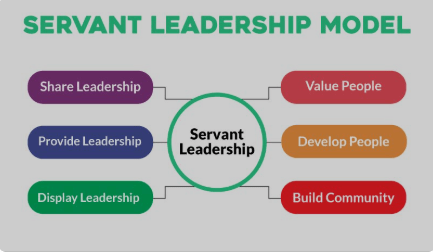
An innovation mindset thrives in environments where curiosity, experimentation, and collaboration are encouraged. Here’s how servant leadership cultivates this mindset:
- Psychological Safety: When a leader serves rather than dictates, team members feel secure to voice unconventional ideas without fear of criticism. This openness is the bedrock of creativity. When employees feel heard and valued, they are more willing to express new ideas without fear of rejection.
- Empowerment: By prioritizing others’ growth, servant leaders delegate authority and encourage initiative, allowing individuals to experiment and innovate without micromanagement.
- Purpose-Driven Exploration: Servant leaders tie innovation to a higher purpose—serving the team or community—which motivates people to think beyond incremental improvements and pursue bold, meaningful solutions.
- Diverse Perspectives: The focus on listening and inclusion ensures that varied viewpoints are heard, sparking the cross-pollination of ideas that often leads to breakthroughs.
- Fosters Cross-Functional Collaboration: Servant leaders break down silos and encourage open dialogue across departments. This cross-pollination of ideas leads to more diverse perspectives and innovative solutions.
- Invests in People and Continuous Learning : Servant leaders focus on mentorship, coaching, and professional development.Teams that are constantly learning and evolving are more likely to think outside the box and drive innovation.
- Empowers Teams to Make Decisions : Innovation slows down in environments where every decision requires managerial approval. Servant leadership encourages decentralized decision-making, allowing teams to move fast and iterate on new ideas.
- Removes Bureaucratic Barriers : Innovation often gets stifled by red tape, rigid processes, and excessive approvals.Servant leaders identify and remove roadblocks, ensuring that teams have the resources and freedom to execute new ideas effectively.
Examples of Servant Leadership Driving Innovation
- Google’s “20% Time” Policy: Employees were encouraged to spend 20% of their time on personal projects that could benefit the company. This led to the creation of Gmail and Google Maps.
- Satya Nadella’s Transformation of Microsoft: By shifting Microsoft’s culture to learning, collaboration, and growth, Nadella helped reignite innovation with products like Azure and AI-based services.
An Innovation Mindset Strengthens Leadership

While servant leadership nurtures innovation, an innovation mindset also enhances servant leadership. Here’s how:
- Encourages Leaders to Adapt and Innovate Themselves : A company with an innovation mindset constantly challenges the status quo, forcing even leaders to rethink their approach. Servant leaders become more adaptable and responsive, making them better mentors and enablers.
- Demands Leaders to Listen & Act on Feedback: An innovation-driven organization thrives on rapid feedback loops and continuous improvement. Servant leaders are forced to actively listen to employees, customers, and stakeholders, making them better at empowering teams.
- Drives a Collaborative & Cross-Functional Culture : Innovation doesn’t happen in silos; it requires teamwork across different domains. Servant leaders naturally encourage collaboration and facilitate knowledge-sharing, accelerating innovation.
Servant leadership replaces the fear-based, control-driven mindset with an open, collaborative, and experiment-driven culture, which is essential for fostering innovation. Servant leadership and an innovation mindset are like dance partners: one provides the rhythm and support (servant leadership), while the other brings the flair and movement (innovation). They’re related through their focus on people and progress, and they thrive together by creating a culture where service fuels creativity, and creativity enhances service. In each other’s company, they transform organizations into places where both individuals and ideas flourish.
 Live Bold !!
Leave a comment